Jewelry News

View

How to Keep Your Pearls Clean Without Ruining Them

by Elizabeth Simpson

How to Keep Your Pearls Clean Without Ruining Them

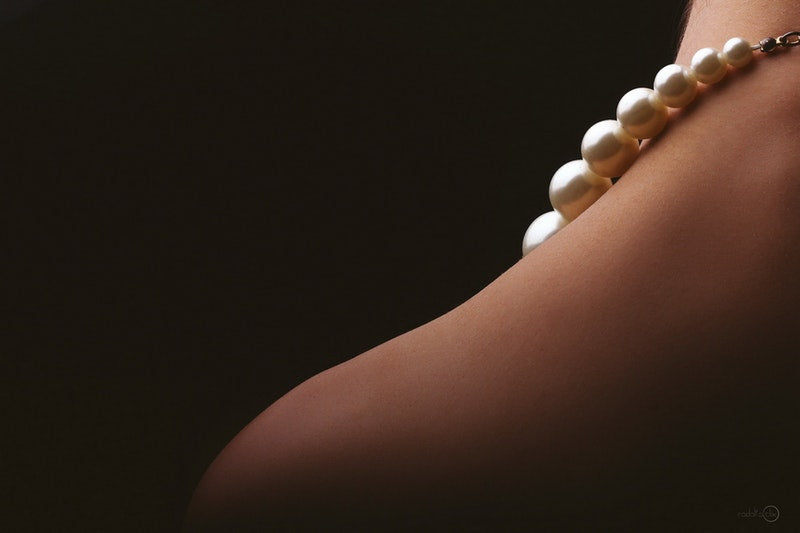
It truly does not get much more classic than pearls. Jackie Kennedy was famous for her triple strand and These exquisite keepsakes manage to be dainty and sweet, yet bold at the same time. (This might explain why they’re a popular choice for weddings!) Cultured pearls are quite delicate and require the right kind of care. They can’t be maintained the same way as other jewelry. How to Care for and Clean Your Pearls 1. After every wear, make sure to wipe your pearls with a soft cloth. This care helps prevent any buildup of skin oils or other substances that may have come into contact with your pearl jewelry as you wore it. 2. Clean with a soft, damp cloth only when needed. If your pearl strand has individual pearls that are visibly stained, you can mix together some lukewarm water and mild dish soap or baby shampoo. Then, dip a soft cloth in the solution and wipe the pearls. Don’t ever submerge a pearl necklace in water, as it will cause damage that will weaken the silk thread. 3. Let your string of pearls dry completely before storing. Again, this will help to preserve the delicate nature of the silk string. 4. Take them to your jeweler once a year. While you should wear your pearls often, all that body oil doesn’t do the silk they are threaded on any favors. Make sure to have your jeweler check the integrity of your pearl bracelets and necklaces at least once a year. They can also give them a thorough, safe cleaning. Click here to make an appointment for a cleaning. Never clean pearls with a steam or ultrasonic jewelry cleaner. Both of these methods are extremely likely to damage the outer layer of the pearl. Overall, they don’t require much more care than a house plant, and your pearls will bring you joy for many years!

Read more

My Top 3 Tips for Buying Diamonds

by Elizabeth Simpson

My Top 3 Tips for Buying Diamonds

Buying diamonds can and should be a fun experience. To make the most of it here are my top 3 tips to make for a seamless shopping experience! Buy a diamond with a certificate.   You need a diamond grading report or appraisal from a Graduate Gemologist- someone trained at the Gemological Institute of America. This will ensure your stone is graded to the highest standards and there’s no question of what you are getting. Buy a diamond, not a certificate! This might sound contrary to my first point but it isn’t. Some buyers study reports looking for the 4 C’s but buying a diamond just based on a report without seeing it would be like buying a car without a test drive. You can do it, but grading reports don’t always show you that sparkle, fire and brilliance we want from our diamonds. Find a jeweler you can trust (oh hey!) and ask them to bring in several stones for you to choose from. You’ll be surprised at the differences between stones. Consider factors beyond price.  Buying a stone online might be cheaper but you get what you pay for. Retailers offer an in shop experience that allows you to look at multiple stones at one time. You also have the opportunity to see loose stones in different settings and retailers are the ones you go to for questions. Retailers also warranty their work and most can perform repairs. Once you find a jeweler that you trust, you will recognize the value of speaking to someone in person and getting help maximizing your budget. Happy Diamond Shopping!

Read more

What can you do with jewelry you don't like anymore?

by Elizabeth Simpson

What can you do with jewelry you don't like anymore?

Jewelry can go out of style. Sometimes you might lose a match to your favorite earrings and be left with just one. Sometimes you want to give a gift, but don’t want to break the bank doing it. There are several ways to repurpose jewelry and create a genuinely unique piece that you or a loved one can rock like a true gem lover. Meet Up With A Pro When you want to turn a few pieces into one, you should check out a local gemologist or jeweler. Working with a gemologist or jeweler to create genuinely unique pieces of jewelry can be a great experience. Just be honest. Tell them what you want and what you want to spend. They will help you stay in your price range and develop a piece you love or someone you love will equally love. Click here to make an appointment with me! So, what can you make? Pendants That Are Dreamy You can combine a diamond earring with a solid gem earring like a ruby or emerald to make a pendant. Use diamonds to create a halo effect around a gem to make it really stand out. Of course, that’s not the only thing you can do with gems. Something Old Into Something New Engagement rings are super special and if you have some of your Mom’s or Grandmother’s old jewelry - why not design an heirloom to say ‘I love you’. Check out different set rings and talk about how to turn your boring gems into something extravagant. Make A Statement Gems are a great way to make a statement. You can re-gift old pieces by turning a few into one bold brooch for Mom. Make your bestie a pair of earrings with something the two of you used to wear all of the time. Or just make yourself something new by using something you don’t love anymore to create something you adore.

Read more

What should you have in your basic jewelry collection?

by Elizabeth Simpson

What should you have in your basic jewelry collection?

Jewelry lovers and accessory aficionados unite! Whether you love jewelry or are just getting into it, there are a few signature pieces that you should have in your wardrobe to really elevate your style. So, what are the ‘must have’ jewels you should own when it comes to creating your basic jewelry collection? Read on for our suggestions: Stud Earrings You should definitely have a pair of simple stud earrings. Studs are versatile, and suit nearly every outfit. For instance, a pair of pearls can accent every color and be a great compliment to diamonds, gold, silver, and every other piece of jewelry you can think of! They are classic and elegant, and a great way to highlight your beautiful face without being too "in" your face. Consider these vintage diamond screw back studs for every day elegance. If you want something a little more 'blingy' we recommend these glittering 2.30ctw Moissanite studs. Dramatic Pieces Brooches and bracelets can be seriously dramatic pieces. Everyone should have one of these in their jewelry wardrobe. Why? They add a sincere accent to things like jean jackets, a cute sweater, and any smart outfit that just needs to be elevated. Think outside the box and go for something with loads of flare, a few gems, or just a chunky standout piece. This vintage Taxco sterling silver bracelet is gorgeously made has funky turquoise pottery inlaid in each link. We love this mysterious Victorian black intaglio brooch for a statement piece. The Statement Necklace That’s right! You need a piece of jewelry that makes a sincere statement. Whether it’s a one jeweled necklace or intricately woven podium style necklace with stones and gems - you’ll make one serious statement in all black with this one. We'd hate to see this gorgeous 5.05ctw Amethyst and Diamond pendant leave the shop, we know it's bound to find a wonderful home soon! This hand-hammered fire opal pendant from Mexico is a gorgeous statement piece! That Rare Find Your rare find might be a clustered pearl ring that stands out like no other. It also could be a pair of drop earrings that are like none other you have ever seen. No matter what, it’s a rare find and something everyone will compliment. While you might not feel comfortable wearing it everyday, this piece will make every outfit you own really, really pop! This stunning ring is a whopping 18 carats, and makes an amazing statement on your hand! These antique sapphire and seed pearl earrings are an amazing statement for an elegant night or for daytime delight. What is the one piece you can't live without?

Read more

Who Decided Birthstones? The Ancient Origins (and the 1912 Plot Twist)

by Elizabeth Simpson

Who Decided Birthstones? The Ancient Origins (and the 1912 Plot Twist)

If you were born in July, you probably know you’re “supposed” to love ruby. If you’re a September baby, sapphire gets assigned to you whether you asked for it or not. But who decided that? Who sat down and declared that March belongs to aquamarine? And when did the entire jewelry world agree to follow the same list? The answer starts in the ancient world… wanders through astrology and medieval superstition… and eventually lands in a 1912 jewelry industry meeting. Let’s pull the thread. The Ancient Beginning: Twelve Stones, One Sacred Breastplate The earliest known origin of birthstones appears in the Book of Exodus in the Hebrew Bible. The High Priest Aaron wore a ceremonial breastplate set with twelve gemstones, each representing one of the twelve tribes of Israel. These stones were not originally assigned to months. They were symbolic — tribal, spiritual, sacred. Later scholars, including the first-century historian Josephus, connected those twelve stones to the twelve zodiac signs. Over time, the zodiac signs became linked to the twelve months of the year. But here’s the key detail most people miss: Originally, people didn’t wear one stone based on their birth month. They wore all twelve. (These days we might say "that's a bit much") The belief was that wearing the full set allowed access to the complete spectrum of spiritual power. It wasn’t about individuality. It was about carrying the entire cosmic toolkit. The idea of “your personal stone” came later. Astrology, Planets, and Protective Power By the early centuries of the Common Era, gemstones were widely believed to hold metaphysical properties. Different stones were associated with different planets. Planets were associated with different zodiac signs. Zodiac signs were associated with months. But there was no universal agreement. Lists varied wildly by region and culture. The gemstone assigned to March in one part of Europe might be completely different somewhere else. There was symbolism, but no standardization. In medieval Europe, gemstones were believed to: Protect against illness Guard against poison Shift color to signal danger Amplify divine or planetary energy Birthstones weren’t fashion. They were spiritual technology. The 1912 Standardization: Enter the Jewelers Fast-forward to 1912. The National Association of Jewelers in the United States (now Jewelers of America) officially standardized the modern birthstone list. Why? Because consistency makes commerce easier. If jewelers across the country are selling different stones for the same month, it creates confusion. A single, agreed-upon list simplified marketing, inventory, and consumer expectations. Additional updates were made later — in 1952, 2002, and 2016 — adding alternative birthstones like tanzanite and spinel. So today’s birthstone chart is a blend of: Biblical symbolism Astrological tradition Medieval lore And a very practical 20th-century industry decision Ancient mysticism and modern marketing, shaking hands. The Modern Birthstone List Here is the current standard birthstone chart recognized in the United States: January – Garnet February – Amethyst March – Aquamarine (and Bloodstone) April – Diamond May – Emerald June – Pearl, Alexandrite, and Moonstone July – Ruby August – Peridot and Spinel September – Sapphire October – Opal and Tourmaline November – Topaz and Citrine December – Turquoise, Tanzanite, and Zircon Multiple options now exist for several months, partly because of availability, partly because of supply realities, and partly because consumers enjoy choice. And honestly? Choice is very modern. Why Birthstones Still Matter Here’s the real reason birthstones have survived thousands of years. They anchor beauty to identity. They give us a story. A timestamp. A way to say: “This is mine.” They mark birthdays, anniversaries, births of children, personal milestones, reinventions, survivals. Whether you’re drawn to aquamarine for its cool clarity or emerald for its depth and saturation, birthstones create a built-in narrative. And jewelry becomes more meaningful when it carries context. The original tradition may have been cosmic protection.Today, it’s personal symbolism. But the through-line is the same: We want objects that mean something.
Read more